
Bay Roberts’ past paved by noteworthy residents
While this year marks the 75th anniversary of the incorporation of the town of Bay Roberts, which today consists of Bay Roberts, Coley’s Point, Butlerville, Country Road, and Shearstown, the town’s history goes back much farther, with settlers documented as early as the 1670s.
Over the years many people of note have called Bay Roberts home, and are still points of pride for the town, as evidenced by The Road to Yesterday Museum archives.
Dr. William Fraser settled in Bay Roberts in 1855 and is thought to have been the first doctor to use anesthesia in Newfoundland. He performed operations in his own surgery and dispensed his own drugs. His son, Donald, became a pharmacist and opened Fraser’s Drugstore. Donald’s daughter, Mary, also studied pharmacy and dispensed drugs there.
Rachel “Datie” Parsons (1878-1966) is the only known native of Bay Roberts to have received the Order of the British Empire (O.B.E.) from King George VI. Parsons was a schoolteacher in Tilton, but became known by her work with the National Institute for the Blind and the Women’s Patriotic Association (WPA). She organized and served as president of the WPA in Bay Roberts and six surrounding communities. During WWII the association knit thousands of garments to be sent to Newfoundland soldiers serving overseas. Parsons was also involved in the yearly distribution and selling of poppies. For her contributions to the war effort she was awarded the O.B.E.
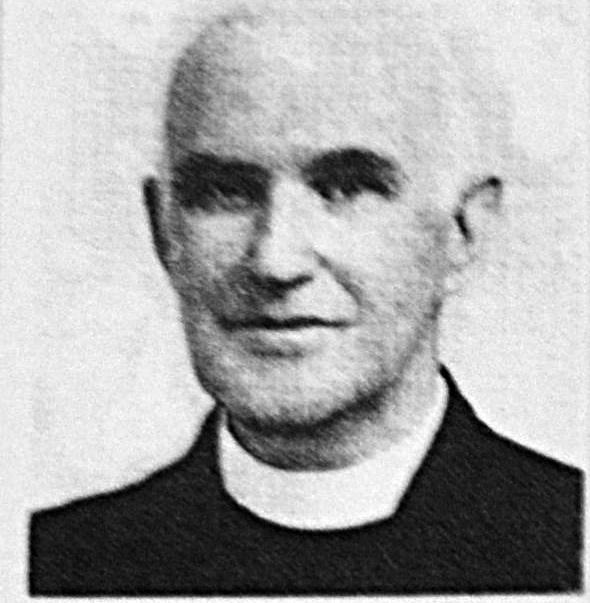
Samuel Mercer (1879-1969) was a priest and a professor of Egyptology from Bay Roberts. In his youth, he worked as a fisherman before turning to teaching and the church. In 1900 he relocated to the United States. He was ordained deacon and priest of the Protestant Episcopal Church in 1904. He claimed to have studied in Wisconsin, at Harvard, as well as at various European universities. Mercer wrote almost 30 books, as well as many academic articles. He was thought to be the only person who could decipher the transcription of Egyptian Pharoah Tutankhamun’s tomb.
Myra Taylor of Bay Roberts (1881-1939) is remembered for her contributions to nursing in Newfoundland. She was appointed head nurse of the surgical wards in St. John’s General Hospital in 1910. Soon after she went overseas to study midwifery and Swedish massage. In 1914, a year after returning to St. John’s, she was put in charge of caring for survivors of the S.S. Newfoundland sealing disaster. Taylor established the Alumnae Association, and inaugurated the Newfoundland Midwifery Board in 1919. She also volunteered her services to the WPA, the Child Welfare Association, and the Girl’s Friendly Association.
Harris Mundon Mosdell (1883-1944) was a journalist and politician from Bay Roberts. He founded the local publication The Bay Roberts Outlook, later renamed The Bay Roberts Guardian, in 1906. He became editor of the Fisherman’s Advocate in 1913, and founded the Daily Mail and St. John’s Daily in 1914 and 1915 respectively. He was appointed to the Legislative Council of Newfoundland in 1922.
Ted Russell (1904-1977) of Coley’s Point began his career as a teacher but held many positions during his life, including that of magistrate, politician, Minister of Natural Resources, and scriptwriter for CBC. He eventually turned his hand to writing his own works, with his most famous being The Tales of Pigeon Inlet. Russell’s “Chronicles of Uncle Mose” aired on the Fisherman’s Broadcast on CBC radio starting in 1953. In the 80s, the radio scripts were adapted for the television series The Tales of Pigeon Inlet. After retiring, Russell received an honorary Doctor of Letters from Memorial University.
In his youth, Chester Dawe (1904-2002) of Bay Roberts collected and sold beach rocks for concrete work at the Cable Building. He later joined his family’s firm, Wm. Dawe & Sons Ltd, and in 1945 formed his own company, Chester Dawe Ltd. Dawe contributed to the building supply industry by building the Newfoundland Hardwood Plant and the Canada Bay Lumber Co. In 1957 he launched a successful campaign to get the Canada Mortgage and Housing Corporation to extend its services to Bell Island, and further extend them to rural Newfoundland in 1958. Dawe was the first “living” person be inducted into the Newfoundland & Labrador Business Hall of Fame.
Oscar Hierlihy (1912-1996) has been referred to as the “Marconi of Newfoundland”. Born in Bay Roberts, Hierlihy built the first one-tube radio on the island at the age of 14. He later made a homemade portable power amplifier that supplied music for silent movies, which were shown weekly at the town’s Western Union Cable Hall on Water Street. At 18 he built and operated the first commercial radio station, VOAS, for Ayre and Sons Ltd, and from 1931-33 owned and operated his own private commercial station, VONA. In 1938 Hierlihy installed the long-distance radio telephone service from Newfoundland to mainland Canada, and installed radio telephone circuits throughout the province. He became chief engineer of the Newfoundland Broadcasting Company in 1951. Hierlihy was awarded the Order of Canada in 1991.
David French (1939-2010) was a playwright from Coley’s Point. He was perhaps best known for his series of semi-autobiographical plays focusing on the fictional Newfoundland family, the Mercers. His works included Saltwater Moon, Leaving Home, 1949, and Of the Fields, Lately, and have been produced throughout Canada and internationally, including on Broadway. His plays have also received television adaptations.